Content Strategy
Does the Same Content Have the Same Impact on Every Platform?
Content that performs well on one platform may not get the same response on another. Platform-specific content creation requires understanding what users expect and evaluating results within the conditions of each channel.
BraindPower
November 3, 2026 · 5 min read

Imagine sharing a video you made from a talk on your Instagram, YouTube and LinkedIn accounts. On one channel, people may debate a single sentence from the speaker, while on another, viewers ask for details about how to put it into practice. The video is the same, but the audience it meets and the conditions in which it is watched change. That is why, when building a social media content strategy, you need to decide what need each post will answer on that particular channel.
Users don't come to every platform with the same expectations
A 2018 study by Hilde Voorveld and colleagues, published in the Journal of Advertising, compared the experiences of 1,346 social media users aged 13 and over in the Netherlands. Participants were asked about the most recent time they used each of eight platforms. This made it possible to examine what they experienced during a specific moment of use rather than their general preferences.
The experiences platforms offered differed. For example, entertainment and relaxation stood out for YouTube use, while Pinterest was associated with gaining practical information. The study also showed that the way users evaluate ads is linked to their experiences on the platform.
Since the data was collected at the end of 2015, these findings shouldn't be read as patterns that describe all of today's users. The lesson for content creation is not to think about your target audience independently of the platform. Understanding what an account's followers are looking for on that channel can be a starting point for deciding a video's length or storytelling style.
Success on one channel may not carry over to another
This difference also shows up in the reactions posts receive. A 2019 study by Kholoud Khalil Aldous, Jisun An and Bernard Jansen examined 676,779 posts by 53 news organizations on Facebook, Instagram, Twitter and YouTube. The eight months of data covered the posts along with their likes and comments.
The researchers found that even when similar posts were used, high engagement on one platform did not guarantee high engagement on another. Because the study focused on news organizations, its findings don't predict the same outcome for every brand account. Still, they support the idea that a successful post should be re-evaluated before it is moved to another channel.
For example, while publishing the full talk on YouTube, you might pick the answer to a single question for Instagram and highlight the professional application of the conversation on LinkedIn. These are editorial choices worth testing. You need to check which adaptation works against your own audience's reactions. Adapting to a platform goes beyond exporting a video in different sizes; it also involves deciding which information comes first.
Evaluate content performance against its purpose
A study by Vasu Unnava and Ashwin Aravindakshan, published in 2021, looked at the posting and engagement data of 20 global brands on Facebook, Twitter and Instagram over a 270-day period. The model they built showed that how engagement carries over into the following days differs by platform, and that posts on one channel can also be associated with engagement on other channels. Because the dataset didn't include the text of the posts, the study doesn't explain the superiority of any particular storytelling style.
This finding offers a reason not to judge performance by the numbers of a single moment. In practice, rather than comparing a video published yesterday with one that has been live for a week in the same table, you can wait until an equal amount of time has passed since each was published. You should also factor in the size of the accounts and whether paid promotion was used.
The purpose of the content should also guide measurement. While you'd expect an announcement to reach more people, for a tutorial video you might want to examine watch time and the point at which viewers drop off. Checking how a metric is calculated on each platform prevents you from misreading similarly named numbers.
Turn channel differences into content decisions with BraindPower
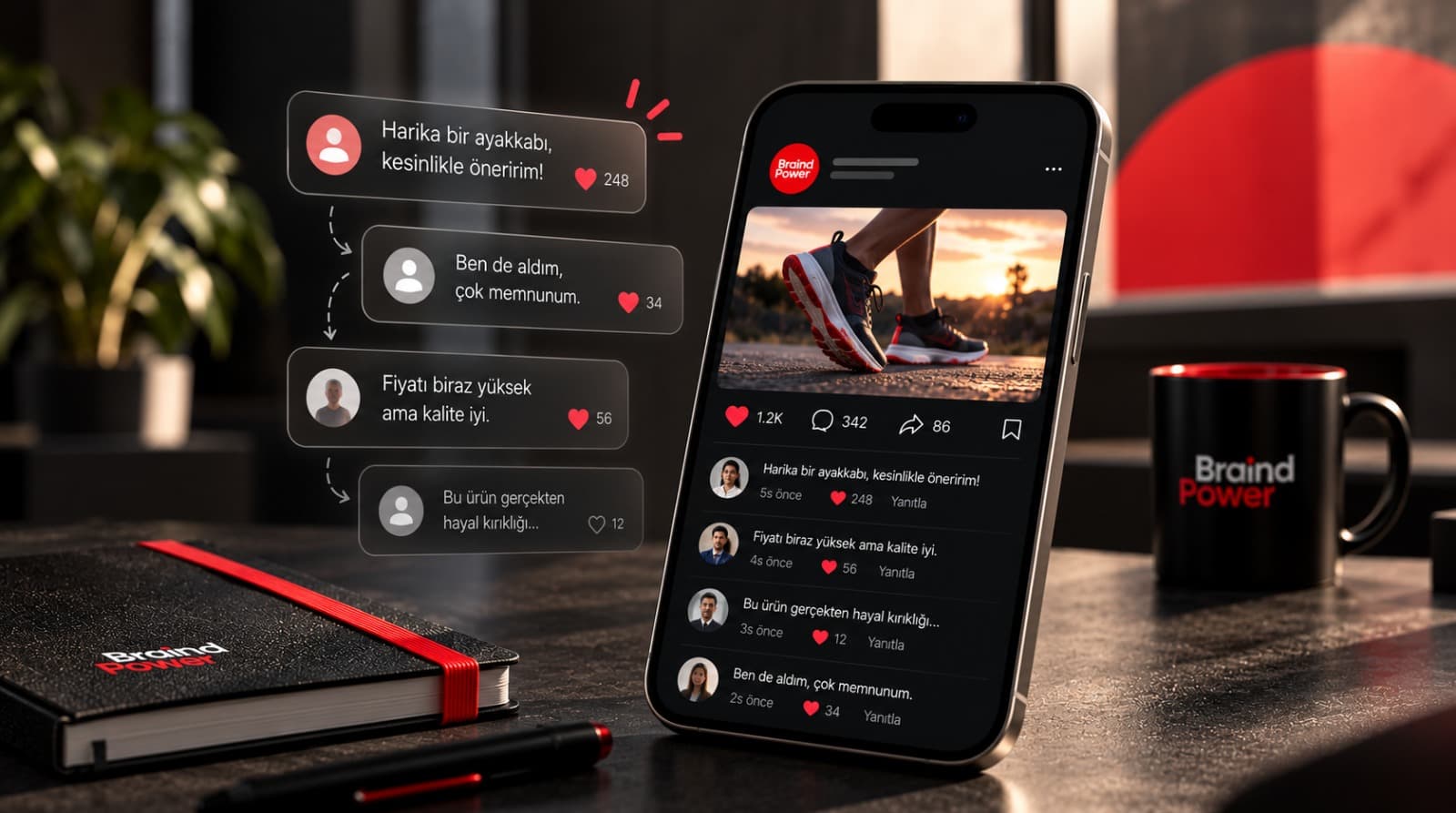
Sustaining this kind of evaluation requires looking at data from different channels together. BraindPower analyzes social media content and user comments, helping you track content performance, sentiment distribution and trending topics. With YouTube analysis, video performance and viewer comments can be included in the same evaluation.
Going back to the talk example: if viewers keep asking for the same clarification under the short clip on Instagram, it may suggest the excerpt you chose lacks context. If comments on YouTube cluster around a specific step of the process, you could consider preparing a separate explanation for that step. BraindPower's topic clustering and summarization features make it easier to review these comments together. Starting from the summaries, your team can check the relevant comments and sections of the video to decide the focus of the next piece of content.
With this approach, you don't have to come up with ideas from scratch for every channel. You can create different pieces of content from the same research, talk or shoot, and let audience reactions decide which adaptation to keep. BraindPower helps you carry the feedback that builds up after publishing into your next content plan.